The science of skin ageing
Simply, without the overwhelm.
The science of skin ageing
Skin ageing, is often simplified.
Fine lines.
Wrinkles.
Loss of firmness.
But what we see on the surface is only part of the story.
Changes in hydration, pigmentation, texture, and resilience reflect something deeper.
This page helps you understand that.
Simply, without overwhelm.
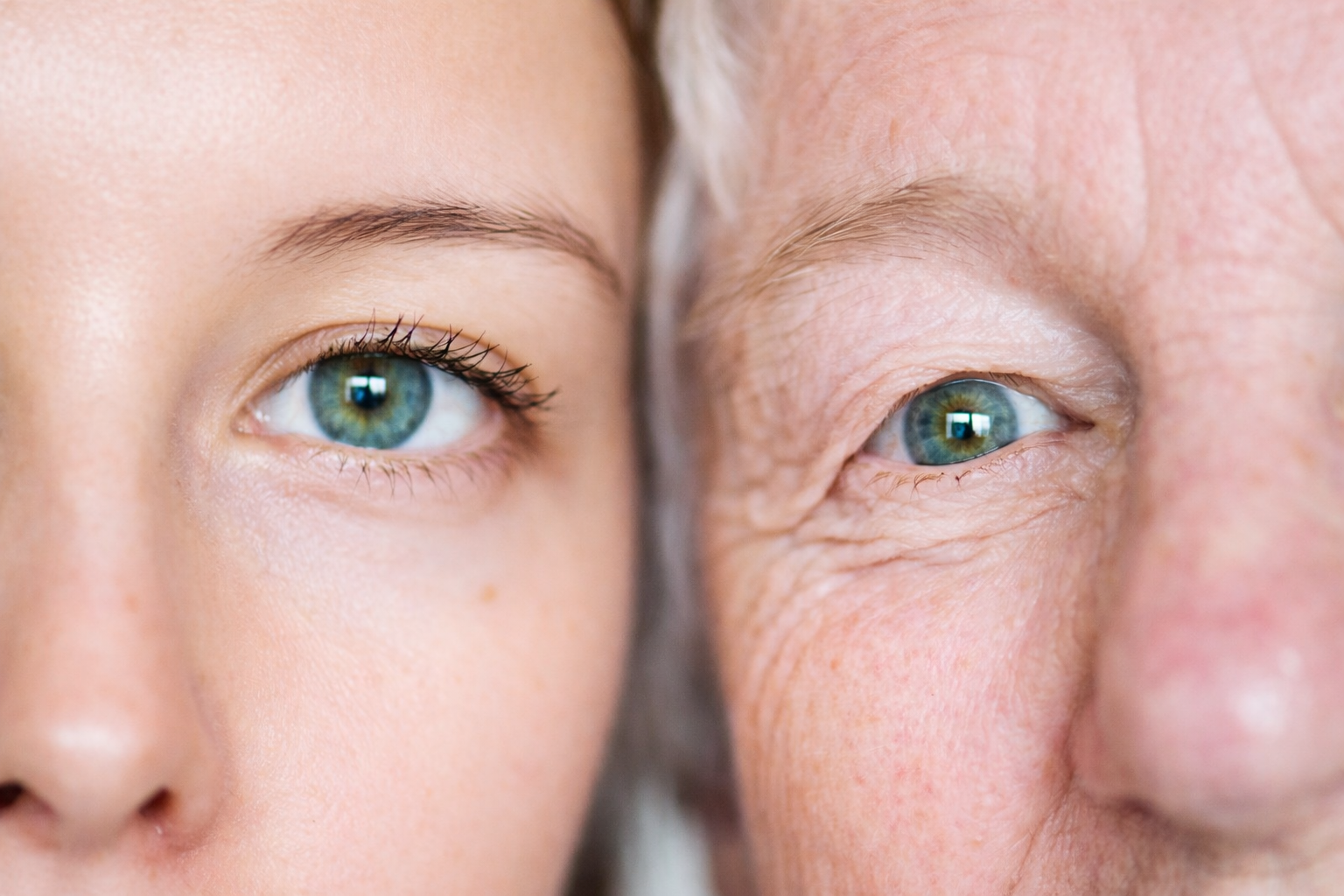
Your skin doesn’t age in isolation
Your skin responds to everything around you — and within you.
- Sun exposure.
- Pollution.
- Hormones.
- Stress.
- Sleep.
- Diet.
This combined influence is known as the exposome, the sum of everything your skin is exposed to over time.
It’s why two people of the same age, even twins, can have very different skin.
Ageing isn’t just about time.
It’s about cumulative exposure.
Why collagen matters
Collagen is the most abundant protein in the human body, making up around 30% of total protein, and around 70% of the structure within the skin.
In the skin, it forms part of the framework that gives skin its strength, support, and ability to bounce back.
In younger skin, there is a natural balance between collagen being produced and collagen being broken down.
Over time, that balance begins to shift. Collagen is broken down more quickly, produced more slowly, and its structure becomes less organised.
This is where change begins

Oxidative stress
Daily exposure to UV light, pollution, and internal stress creates unstable molecules known as free radicals.
These damage surrounding structures, including collagen. This process is called oxidative stress.
Over time, this accelerates the breakdown of the skin’s support system.
It also contributes to visible changes such as uneven pigmentation, as the skin attempts to protect itself.
Hormonal changes
Hormones, particularly oestrogen, play a key role in collagen production.
Oestrogen supports the cells that produce collagen and helps regulate how quickly it is broken down.
As levels decline, especially around menopause, collagen production slows, breakdown increases and the skin becomes thinner, drier and less resilient.
Glycation
Glycation occurs when sugar molecules attach to proteins such as collagen.
This makes collagen fibres stiffer and less flexible, reducing the skin’s strength and elasticity.
At the same time, it triggers inflammation and oxidative stress, further accelerating breakdown.
The bigger picture
Skin ageing isn’t caused by one single factor.
It’s the result of multiple processes happening at the same time.
This is why simple solutions often fall short.
Because the biology isn’t simple.
Understanding your skin is the first step.
Not to fix it, but to support it more effectively.
That means looking at the bigger picture.
Considering how your skin is affected over time, both internally and externally.
Because healthy skin isn’t built in isolation.
It’s more than collagen.

Sarah Newey
Pharmacist Prescriber | Skin ageing specialist